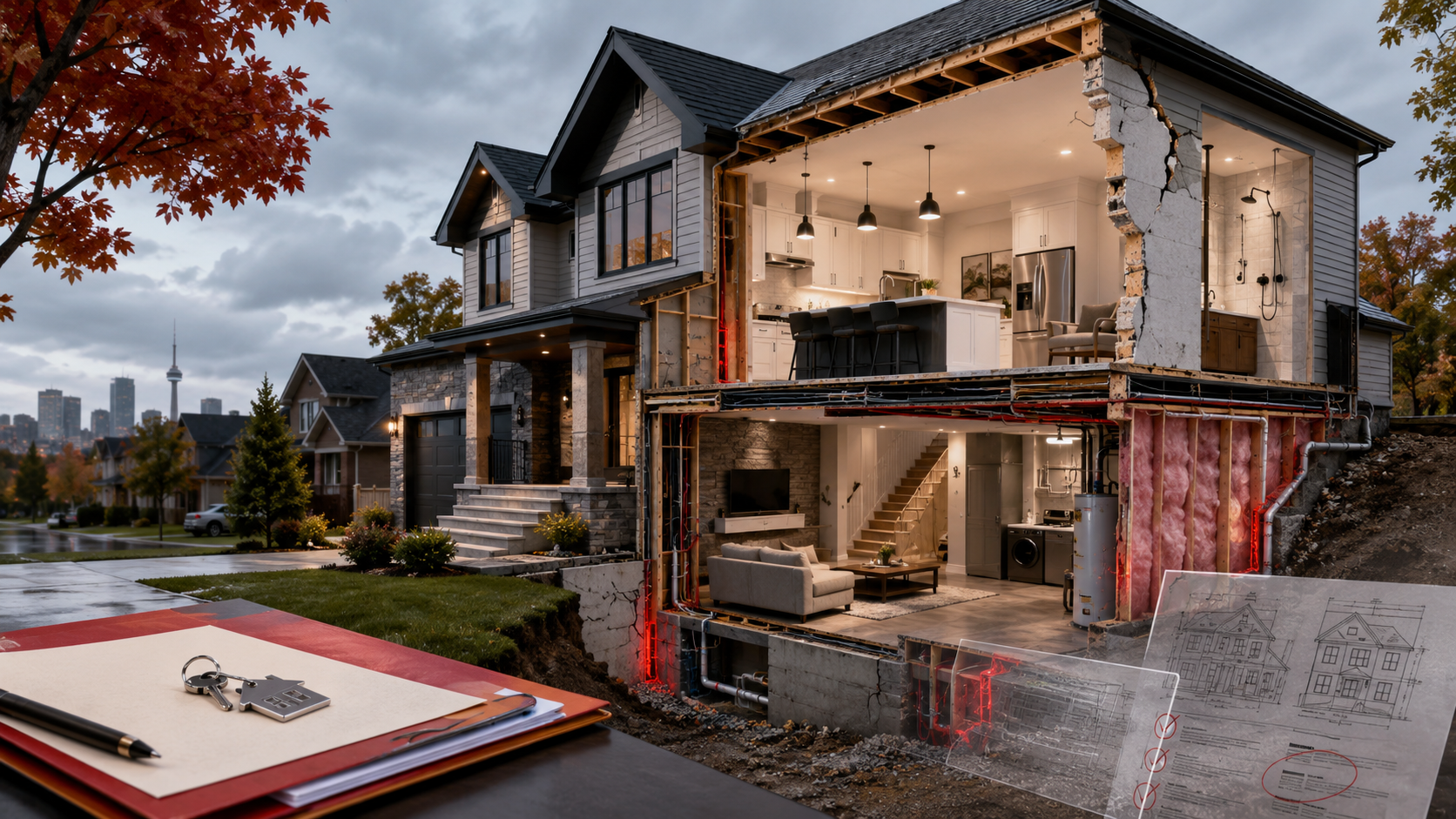
The seller finished the basement themselves ten years ago. They built a nice two-bedroom suite down there — flooring, drywall, a full bathroom, a kitchen rough-in. It looks great. Your home inspector didn't raise any major concerns. The listing said "finished basement." What it didn't say was that no permit was ever pulled.
Now it's your house. And the municipality's records show no permits for any of the basement work. The electrical wasn't inspected. The plumbing tie-in wasn't approved. The egress windows don't meet fire code. The basement suite is, legally, a non-conforming use. And all of that is now your problem.
Unpermitted work in Canadian homes is a pervasive issue — concentrated in older urban properties, in neighbourhoods that experienced dense renovation activity during boom years, and in markets where secondary suites were created informally before municipalities formalised their secondary suite programs. Understanding the liability landscape is essential for any buyer doing due diligence.
How Liability Transfers at Closing
In Canadian real estate law, property conveyance operates under a principle of "caveat emptor" — buyer beware — unless modified by specific disclosure obligations. Sellers are required to disclose known material defects. But "known" is the operative word. A seller who claims they didn't know the basement work was unpermitted (plausibly, if they inherited the situation themselves) may face limited legal exposure.
Once title transfers, the new owner is responsible for the property's compliance with applicable municipal codes. Any outstanding compliance orders, permit violations, or unresolved building infractions attach to the property — not to the previous owner. This is the mechanism by which unpermitted work becomes a buyer problem even when the buyer didn't create it.
The Six Ways Unpermitted Work Costs You Money
Remediation orders
Municipalities can issue orders requiring non-compliant work to be brought up to code — or demolished and rebuilt. Costs vary from thousands to tens of thousands depending on scope.
Insurance voids
Many insurers exclude losses arising from work done without a permit. A fire originating in an unpermitted electrical panel may not be covered, even on a standard homeowners policy.
Resale complications
When you go to sell, the unpermitted work becomes your disclosure obligation. Buyers will negotiate price reductions, and you'll face the same remediation or demolition question you inherited.
Illegal suite income loss
If an unpermitted basement suite is your rental income plan, a municipal enforcement action can result in the suite being ordered vacated — eliminating the income you bought the property for.
Appraisal discounts
Appraisers who identify unpermitted square footage may exclude it from the appraisal value. This affects the loan-to-value ratio and can create financing complications on purchase or refinance.
Safety exposure
Unpermitted electrical, plumbing, and structural work wasn't inspected. The risk of fire, water damage, or structural failure is real — and the costs of damage events are compounded by coverage questions.
The Most Commonly Unpermitted Work in Canadian Homes
Not all unpermitted work carries equal risk. Some types are more commonly encountered and more consequential:
Basement suites and secondary units
This is the single most common category. Hundreds of thousands of Canadian homes have basement suites that were created informally — before municipal secondary suite programs existed, or by owners who wanted to avoid the permit process. Many look completely professional. Many fail fire separation, egress, and ventilation codes that exist specifically to protect occupants.
Additions and decks
Rear additions, garden suites, and decks are frequently built without permits — particularly in older neighbourhoods where property owners assumed small structures wouldn't attract attention. Decks built without permits often fail to meet setback requirements or load-bearing standards.
Garage conversions
Converting an attached or detached garage into a living space or office requires permits and often structural modifications that aren't undertaken when the work is done informally. Garage conversion suites are common in markets where housing affordability drove secondary income strategies.
HVAC and electrical upgrades
Panel upgrades, new HVAC installations, and generator tie-ins are frequently done without permits. These are high-risk from an insurance perspective because they're the categories most likely to cause fire events — and most likely to generate coverage disputes when claims are filed.
What Due Diligence Looks Like in Practice
Before removing conditions on any resale property that shows evidence of renovation, you should:
- Pull the permit history. Use the municipal building portal or a service like Neighbourly's Neighbourhood Report to get a comprehensive permit record for the address. Look for permits corresponding to every visible renovation. Missing permits are a direct red flag.
- Cross-reference permit dates with renovation vintage. A basement that clearly dates from the 2000s with no permits from that period is a problem. A kitchen renovated in 2019 with a 2019 permit on record is clean.
- Ask the right disclosure questions. Your agent should specifically ask the seller to list all renovations and confirm whether permits were pulled. In most provinces, sellers who knowingly conceal material defects face legal exposure — so a direct question creates a disclosure obligation.
- Get a quote for retroactive permitting or remediation. If unpermitted work exists, get a contractor to estimate the cost of either pulling a retroactive permit (possible in some municipalities for some work) or bringing the work up to current code. Use this as a negotiating basis.